The short answer
A biological age test estimates how old your body is, based on measurements that change as you age, and compares it with your age in years. Calculators use questionnaires or routine labs, epigenetic tests read chemical marks on your DNA, and proteomic tests read hundreds to thousands of proteins in your blood. Proteins can also be traced to specific organs, so a proteomic test can estimate an age for your heart, brain or kidneys, not only your whole body.
What biological age means
Two people born the same year rarely age at the same speed. One runs at 60 and the other struggles with stairs. Chronological age is the time since you were born. Biological age is an estimate of how far your body has actually aged, measured against what is typical for people of each age.
If your biological age is higher than your age in years, your body is aging faster than expected. If it is lower, slower. The gap is what matters, because it predicts things your birthday can't: who develops heart disease, diabetes or dementia, and who dies sooner. Most of the clocks in this guide are judged on that test.
A short history of biological age tests
The idea is older than any of the technology.
- 1969. Gerontologist Alex Comfort proposed measuring a person's rate of aging with a battery of tests, rather than assuming everyone ages on schedule.
- 1958 to today. Long-running studies such as the Baltimore Longitudinal Study of Aging, which began in 1958 and still runs, track the same people for decades, building the data to tell normal aging from disease.
- 2006. The Klemera-Doubal method gave biological age a formal statistical definition from several biomarkers at once.
- 2013. The first widely used epigenetic clocks. Hannum and colleagues built one from 71 DNA methylation sites in blood, and Steve Horvath built one from 353 sites that worked across 51 tissues and cell types, with a median error of 3.6 years on new samples. Both were trained to predict age in years.
- 2018. DNAm PhenoAge changed the target from age to health. Morgan Levine and colleagues trained it on Phenotypic Age, a score built from nine routine blood tests plus age, and each extra year of DNAm PhenoAge meant a 4.5% higher risk of death.
- 2019. GrimAge was trained on time to death, using DNA stand-ins for seven blood proteins and smoking. At the time, it was the strongest predictor of mortality among epigenetic clocks.
- 2022. DunedinPACE measured a speed instead of an age: how fast 19 measures of organ function declined in 1,037 people followed from age 26 to 45.
- 2018 to today. Proteomic clocks read the proteins themselves, first in a few hundred people, then a few thousand and then tens of thousands, with separate ages for individual organs. More on these below.
Each generation fixed a weakness of the last. Early clocks learned to guess your birthday very well, which is not the same as knowing how healthy you are. Later clocks were trained on illness and death. The newest ones also ask where in the body aging is happening.
The main types of biological age test
| Type | What it measures | Sample | What you get | Main limits |
|---|---|---|---|---|
| Online calculator | Questionnaire answers: habits, health history, sometimes weight or blood pressure | None | A rough age estimate, free | Self-reported, rarely validated as biological age |
| Blood chemistry (Phenotypic Age) | Nine routine labs plus age, such as glucose, albumin, creatinine and C-reactive protein | Standard blood draw | One whole-body age | Only as broad as the labs it uses |
| Telomere length | The protective caps on chromosomes | Blood or saliva | A telomere percentile | Weak predictor of health |
| Epigenetic (DNA methylation) | Chemical marks on DNA at dozens to thousands of sites | Saliva, cheek swab or blood | Whole-body age or pace of aging; some report system ages | Results shift with sample type and blood cell mix |
| Proteomic | Hundreds to thousands of proteins in blood | Blood | Whole-body and organ ages, plus disease risk | Newer; few consumer tests so far |
Biological age calculators
A free biological age calculator is the most common place people start. Questionnaire versions turn answers about sleep, exercise, smoking and diet into a number. They can be a useful nudge, but they estimate risk from what you report, not from your body, and none we found has been validated as a measure of biological age.
A stronger kind of calculator uses blood work you may already have. Phenotypic Age is a published formula that combines nine routine lab values with your age; in 11,617 US adults, each extra year predicted a 9% higher risk of death. Several free online tools run it. Its reach is limited by its inputs: nine labs cover only a few body systems, and a single whole-body number can't say which organ is aging.
Telomere tests
Telomeres shorten as cells divide, which made them an early favorite. The evidence disappointed. Across 121,749 people, each standard deviation shorter telomeres raised the risk of death by only about 9%, and a review called links to other health markers "equivocal".
Epigenetic age tests
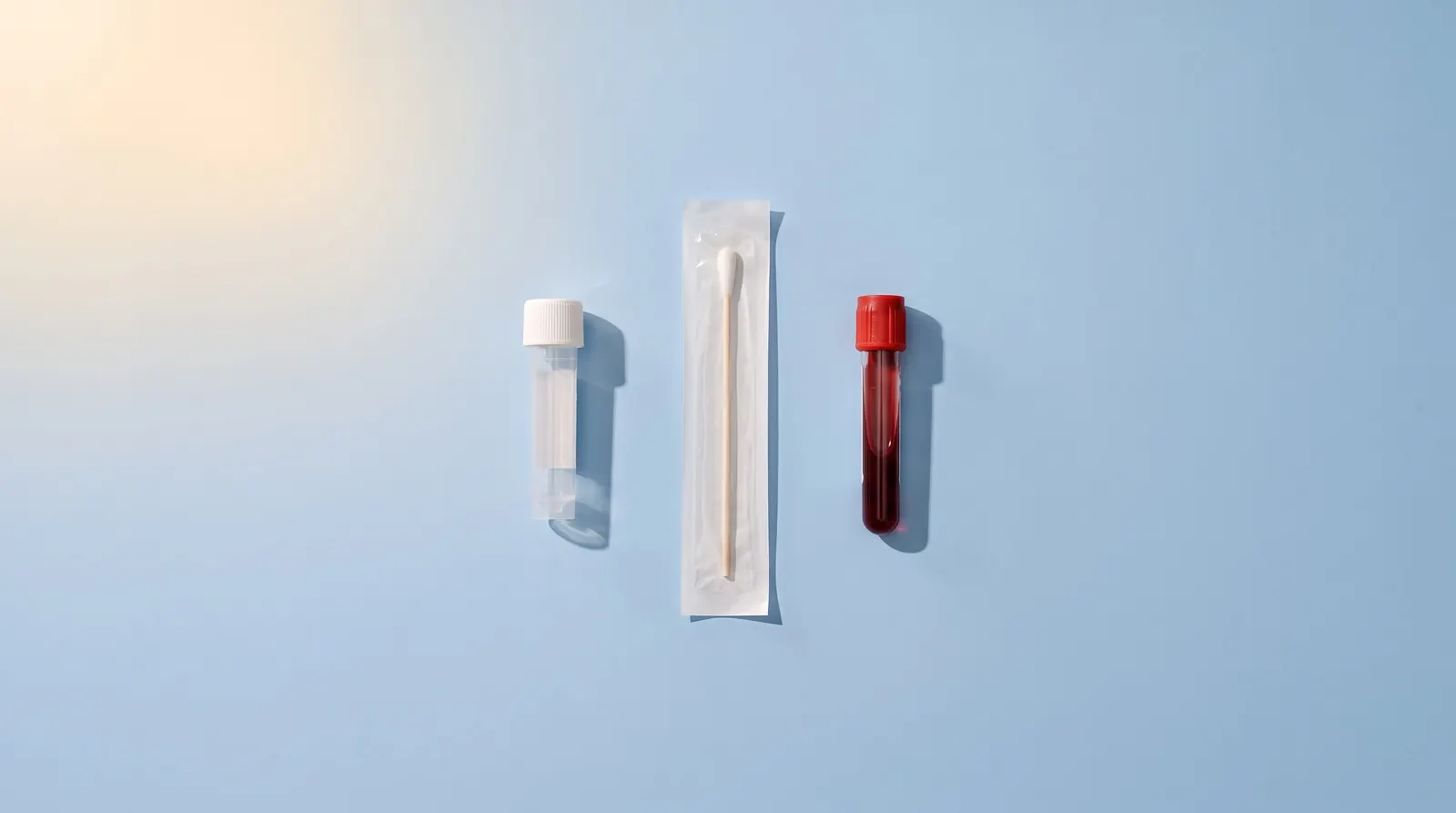
Epigenetic tests are the best known consumer option and among the most studied. They read methylation, chemical tags on DNA that shift with age, usually from saliva, a cheek swab or a drop of blood.
Their limits are well documented:
- Repeatability. When researchers ran the same blood sample twice, some widely used clocks gave results up to 9 years apart, while the typical spread between people is only 3 to 5 years. Newer designs are far more consistent: DunedinPACE gave near-identical results on repeat runs.
- Sample type. The same person's saliva, cheek and blood can give very different ages, by almost 30 years for some clocks.
- Cell mix. Methylation differs between types of immune cells, so a clock partly measures which cells happen to be in your sample.
- Indirect organ ages. Some tests now report ages for organ systems, but they infer them from DNA in blood or saliva cells, not from the organs.
None of this makes epigenetic clocks useless; the best ones predict disease and death well. It explains why two tests can give you two different ages. When researchers compared 11 measures of biological aging in the same 964 people, they found "low agreement" between them.
Why proteomics is different

Proteins do most of the work in your body. They carry oxygen, fight infection, repair tissue and pass signals between organs, and thousands of them circulate in your blood. A proteomic test measures those proteins directly. Three things set it apart.
- Proteins come from specific organs. Many proteins are made mainly in one place, such as the brain, heart, liver or kidney. In a 2023 Nature study, 856 of the 4,778 proteins measured came from genes at least four times more active in one organ than in any other. That is what lets a blood test estimate an age for each organ, instead of inferring one from DNA in blood cells.
- They measure different biology. One widely used protein clock shares almost no genes with the best-known DNA clocks: 5 with Horvath's, 11 with PhenoAge and 3 with DunedinPACE. Proteins and methylation are two different views of aging, not one view measured twice.
- They respond to what you do. In trials, hundreds of blood proteins changed after 20 weeks of endurance training and after a weight-loss diet. A test you can repeat is a test you can act on.
What the key protein studies found
- Aging comes in waves (2019). Measuring 2,925 proteins in 4,263 people aged 18 to 95, Stanford researchers found the blood proteome shifts most around ages 34, 60 and 78, not at a steady rate. People whose proteins looked younger than their age did better on cognitive and physical tests.
- Every organ ages at its own pace (2023). Across 5,676 adults and 11 organs, nearly 20% of people had one organ that looked far older than it does in other people their age, and 1.7% had several. In a US cohort followed for 15 years, each extra four or so years of organ age raised the risk of death by roughly 15% to 50%, depending on the organ, and the same step in heart age came with about 2.4 times the risk of heart failure, in a small group. Brain and vascular ages predicted Alzheimer's progression as strongly as a leading Alzheimer's blood marker (Nature).
- A clock that holds up across countries (2024). A 204-protein clock built in 45,441 UK Biobank participants estimated age about as accurately in China and Finland. In the UK data it predicted 18 chronic diseases, including heart, liver and kidney disease, diabetes and dementia. The authors estimate that people in the oldest-aging 5% had 3.6 times the risk of death and 5.8 times the risk of Alzheimer's of those in the youngest 5% (Nature Medicine).
- Your organs, counted (2025). In 44,498 people followed for up to 17 years, a much older-looking brain raised Alzheimer's risk about as much as carrying one copy of APOE4, the best-known risk gene, while a youthful brain cut it by about three quarters. People with eight or more aged organs had 8.3 times the risk of death of people with none. In a small group, a youthful brain and immune system together roughly halved it.
- Down to cell types (2026). Using more than 7,000 proteins in 60,542 people, researchers estimated ages for more than 40 cell types. About one in four people (20% to 25%) had one cell type aging unusually fast, and 1% to 3% had ten or more, a level of detail no single whole-body number can give.
Protein clocks don't replace every other measure. In one Scottish cohort followed for 16 years, the GrimAge2 epigenetic clock, brain scans, lung function and memory tests each predicted death somewhat better than protein organ clocks. What proteins add is where: which organ, which cell type and which pathway your number points to, and, with repeat testing, whether it changes over time.
The evidence: tens of thousands of people, hundreds of diseases
Protein-based aging rests on some of the largest health datasets ever built. Three matter most.

- UK Biobank. Its Pharma Proteomics Project measured about 2,900 proteins in the blood of 54,219 people, funded by 13 biopharmaceutical companies and published in Nature in 2023. Those volunteers have been followed for more than a decade, so researchers can see which protein patterns came before which diseases. In January 2025 UK Biobank announced a far larger study: up to 5,400 proteins in 600,000 samples. A consortium of 14 companies, including Novo Nordisk, AstraZeneca, Pfizer and Regeneron, is paying for the first 300,000, with data released in stages from 2026.
- deCODE genetics in Iceland. It measured about 4,700 distinct proteins in 35,559 Icelanders and tested them against 373 diseases and traits.
- All of Us. The NIH's national research program added proteomics for the first time in 2026, for about 10,000 participants, the start of a protein layer on a cohort of more than 747,000 Americans.
Studies of these cohorts have linked blood proteins to hundreds of diseases. A 2025 atlas in Cell of 53,026 UK Biobank participants followed for a median of 14.8 years logged 168,100 links between proteins and diseases, and found proteins that told people with and without a disease apart with good accuracy (AUC above 0.80) for 183 conditions, including some already present when blood was drawn. On PubMed, about 43,000 papers mention proteomics alongside blood, plasma or serum.
Proteins predict disease years ahead
- Many diseases at once. In 41,931 people, models of just 5 to 20 proteins predicted 10-year risk better than standard clinical information for 67 of 218 diseases, and beat clinical information plus 37 routine lab tests for 52 of them (Nature Medicine, 2024).
- Dementia. In 52,645 adults, the brain-cell protein GFAP, combined with age, sex, education and APOE4 genotype, predicted dementia with an AUC of 0.89, and GFAP began to change at least 10 years before diagnosis (Nature Aging, 2024).
- Diabetes. Across 47,600 people, a protein score for type 2 diabetes outperformed both HbA1c, the standard blood sugar test, and a genetic risk score (Nature Aging, 2024).
- Cancer. In UK Biobank, 107 protein-cancer links held for cancers diagnosed more than seven years after the blood draw (Nature Communications, 2024).
Not every result is dramatic. For heart attack, stroke and cardiovascular death, deCODE found a protein score added only a modest gain over standard risk factors. The biggest gains came in diseases routine labs don't screen for, such as multiple myeloma and motor neuron disease, rather than heart disease, where cholesterol and blood pressure already do much of the work.
Proteins move when you change
A clock is only useful for tracking your health if it can move. Blood proteins do.

- Exercise. After a 20-week endurance program in more than 650 previously sedentary adults, 102 proteins tracked how much each person's fitness improved.
- Weight loss. When 43 people lost 12% of their body weight, 93 blood proteins changed, and nearly everyone improved on an inflammation panel.
- Calorie restriction. In the CALERIE trial, eating about 14% less for two years lowered a key inflammation signal in the blood.
Drug companies are now testing aging clocks in their trials
The clearest sign of where the field is heading comes from the makers of GLP-1 drugs. Both Novo Nordisk and Eli Lilly shared aging-clock results from their trials at the Aging Research and Drug Discovery meeting in Boston in October 2026, reported by MIT Technology Review.
Novo Nordisk has measured blood proteins across its semaglutide trials. In STEP 1 and STEP 2, semaglutide shifted hundreds of blood proteins linked to metabolism, inflammation and heart risk (Nature Medicine, 2025). In September 2026, Novo scientists posted an analysis of 10,052 people across five placebo-controlled trials, all in people with obesity, heart disease, heart failure, kidney disease or type 2 diabetes. Measured with protein-based organ clocks, people on semaglutide had heart ages about 2 to 4 years younger than those on placebo, and kidney, brain, pancreas and lung ages 1 to 4 years younger. The effect was not fully explained by weight loss or lower blood sugar.
Eli Lilly presented results for tirzepatide from a smaller group, measured with epigenetic (DNA-based) clocks rather than protein clocks. Lilly has also measured blood proteins on two large protein panels in its SURMOUNT-5 trial, which compares tirzepatide with semaglutide; that analysis has not yet been published.
These are early results. The Novo analysis is a preprint that has not yet been peer reviewed, and its authors write that lower clock readings show a drug response, not proof of a younger body. Outside scientists quoted by MIT Technology Review urged caution, and neither company claims its drug reverses aging. What the work does show is that protein-based organ ages can be measured across thousands of trial patients, move with treatment within months, and that aging clocks are now being tested by two of the largest drug companies in the world.
How to choose a biological age test
Ask five questions of any test before you buy it.
- What was it trained to predict? A clock trained only on age in years tells you little about health. Look for one trained or validated on disease and death.
- Was it tested in people it never saw? Accuracy on its own training data means little. Look for validation in a separate, large cohort followed for years.
- Does it give the same answer twice? Ask whether repeat samples agree. A test that wanders by years between runs can't track change.
- Does it tell you where? A single number can't say whether your heart, liver or brain is driving it. Organ-level results give you somewhere to act.
- Can it move? If you plan to change something, the test should respond to changes in sleep, diet, exercise or medicine, and be practical to repeat.
What a biological age test can't tell you
- It is not a diagnosis. A higher age raises the odds of disease; it doesn't mean you have one.
- It doesn't replace routine blood work. Standard labs diagnose and monitor disease and are still the clinical standard.
- Small changes can be noise. Every measurement has error. Trends across repeat tests matter more than one result.
- A lower number is not proof of a longer life. Clocks predict risk across large groups. Whether moving your number changes your own outcome is still being studied.
Frequently asked questions
Are biological age tests accurate?
The better ones predict disease and death in large studies, which is the real test of accuracy. They differ in how consistent they are. Some widely used epigenetic clocks gave results up to 9 years apart on the same sample, while newer designs keep most repeat results within about 1.5 years. Look for a test validated on health outcomes in an independent group, with published repeatability.
Can a blood test tell my biological age?
Yes. Blood carries proteins and other signals from almost every organ. A routine-lab formula like Phenotypic Age estimates a whole-body age from about nine values. A proteomic test reads hundreds to thousands of proteins, which lets it estimate ages for individual organs as well as your whole body.
Can I check my biological age for free?
Online calculators are free, but questionnaire-based ones estimate risk from your answers rather than measure your body. If your recent blood work includes a metabolic panel, a blood count and C-reactive protein, a Phenotypic Age calculator can turn those nine values and your age into a rough whole-body age. A measured test is needed for anything more detailed.
How much does a biological age test cost?
Consumer epigenetic tests usually cost a few hundred dollars; Elysium's saliva-based Index, for example, lists at $299. Calculators are free. Proteomic tests are newer to consumers, and pricing varies.
How often should I retest?
It depends on what you want to see. To follow a specific change, such as a new medication or training plan, test before and after. Blood proteins can shift within weeks to months of a change, so retesting every few months shows whether your plan is working.
Can I lower my biological age?
Some studies show biological age measures respond to exercise, weight loss, calorie restriction and some medicines, including early results with GLP-1 drugs, though not every clock moves in every study. The changes are usually measured in months to a few years. No test can yet prove that lowering your number will lengthen your life, but it can show whether your body is responding.
More than one number
Most biological age tests end with a single age. HeliosOne is built to show where that age comes from.

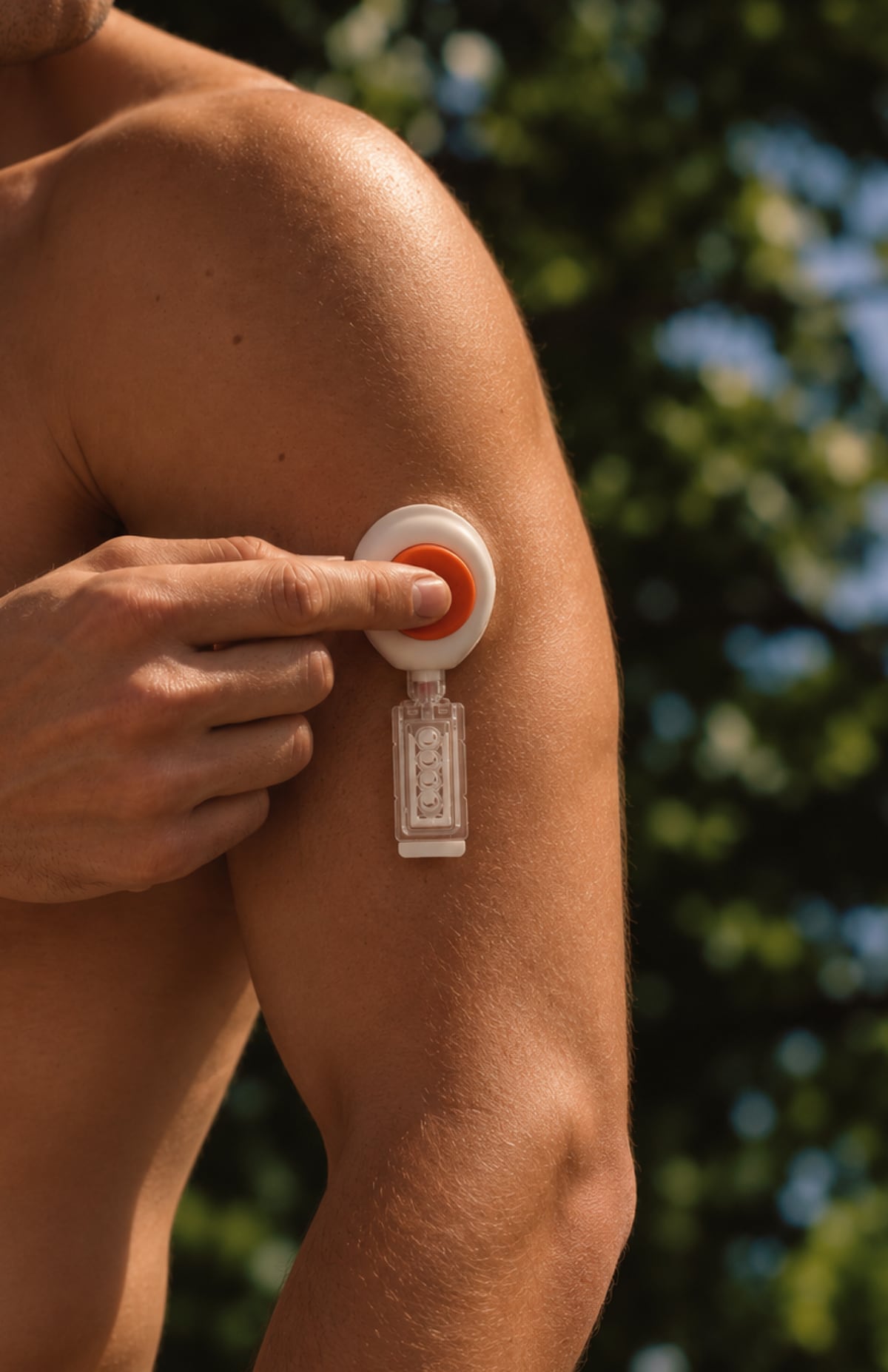
From a few drops of blood, collected at home with a small device on your upper arm, we measure about 1,000 proteins and turn them into:
- A biological age for your whole body, and for individual organs, cells and pathways, 71 scores today
- Risk scores for the diseases those ages predict, with the proteins driving each one. Together, our scores predict risk for more than 200 diseases
- Next steps from our AI agent, across lifestyle, nutrition, supplements and follow-up care, each linked to the published studies behind it
- A way to track what you change. Retest to see whether a new routine, diet or medicine is moving your results
We tested every score, unchanged, on an independent group of more than 40,000 people followed for over a decade, and all 71 predicted future disease and death. HeliosOne is not a diagnostic test; it gives you and your physician an earlier, broader view and clear next steps.
Sources
43 studies and reports
- Comfort A. Lancet, 1969. Test-battery to measure ageing-rate in man.
- National Institute on Aging. The Baltimore Longitudinal Study of Aging.
- Klemera et al. Mech Ageing Dev, 2006. A new approach to the concept and computation of biological age.
- Hannum et al. Mol Cell, 2013. Genome-wide methylation profiles reveal quantitative views of human aging rates.
- Horvath S. Genome Biol, 2013. DNA methylation age of human tissues and cell types.
- Levine et al. Aging (Albany NY), 2018. An epigenetic biomarker of aging for lifespan and healthspan.
- Lu et al. Aging (Albany NY), 2019. DNA methylation GrimAge strongly predicts lifespan and healthspan.
- Belsky et al. Elife, 2022. DunedinPACE, a DNA methylation biomarker of the pace of aging.
- Tanaka et al. Aging Cell, 2018. Plasma proteomic signature of age in healthy humans.
- Lehallier et al. Nat Med, 2019. Undulating changes in human plasma proteome profiles across the lifespan.
- Liu et al. PLoS Med, 2018. A new aging measure captures morbidity and mortality risk across diverse subpopulations from NHANES IV: A cohort study.
- Wang et al. Ageing Res Rev, 2018. Telomere Length and All-Cause Mortality: A Meta-analysis.
- Sanders et al. Epidemiol Rev, 2013. Telomere length in epidemiology: a biomarker of aging, age-related disease, both, or neither?.
- Higgins-Chen et al. Nat Aging, 2022. A computational solution for bolstering reliability of epigenetic clocks: Implications for clinical trials and longitudinal tracking.
- Apsley et al. Aging Cell, 2025. Cross-tissue comparison of epigenetic aging clocks in humans.
- Tomusiak et al. Commun Biol, 2024. Development of an epigenetic clock resistant to changes in immune cell composition.
- Belsky et al. Am J Epidemiol, 2018. Eleven Telomere, Epigenetic Clock, and Biomarker-Composite Quantifications of Biological Aging: Do They Measure the Same Thing?.
- Oh et al. Nature, 2023. Organ aging signatures in the plasma proteome track health and disease (full text).
- Argentieri et al. Nat Med, 2024. Proteomic aging clock predicts mortality and risk of common age-related diseases (full text).
- Robbins et al. Nat Metab, 2021. Human plasma proteomic profiles indicative of cardiorespiratory fitness.
- Geyer et al. Mol Syst Biol, 2016. Proteomics reveals the effects of sustained weight loss on the human plasma proteome.
- Oh et al. Nature, 2023. Organ aging signatures in the plasma proteome track health and disease.
- Argentieri et al. Nat Med, 2024. Proteomic aging clock predicts mortality and risk of common age-related diseases in diverse populations.
- Oh et al. Nat Med, 2025. Plasma proteomics links brain and immune system aging with healthspan and longevity.
- Ding et al. Nat Med, 2026. Plasma proteomic signatures of cellular aging predict human disease.
- Pyrgioti et al. Aging Cell, 2026. Multimodal Ageing Biomarkers and Plasma Proteomic Signatures Associated With All-Cause Mortality.
- Sun et al. Nature, 2023. Plasma proteomic associations with genetics and health in the UK Biobank.
- UK Biobank, January 2025. Launch of world's most significant protein study.
- Ferkingstad et al. Nat Genet, 2021. Large-scale integration of the plasma proteome with genetics and disease.
- NIH news release, 2026. NIH's All of Us Research Program now largest integrated genomics and health database in the world.
- Deng et al. Cell, 2025. Atlas of the plasma proteome in health and disease in 53,026 adults.
- PubMed search: proteom*[tiab] AND (plasma OR serum OR blood OR circulating), November 2026.
- Carrasco-Zanini et al. Nat Med, 2024. Proteomic signatures improve risk prediction for common and rare diseases.
- Guo et al. Nat Aging, 2024. Plasma proteomic profiles predict future dementia in healthy adults.
- Gadd et al. Nat Aging, 2024. Blood protein assessment of leading incident diseases and mortality in the UK Biobank.
- Papier et al. Nat Commun, 2024. Identifying proteomic risk factors for cancer using prospective and exome analyses of 1463 circulating proteins and risk of 19 cancers in the UK Biobank.
- Helgason et al. JAMA, 2023. Evaluation of Large-Scale Proteomics for Prediction of Cardiovascular Events.
- Mishra et al. Nat Aging, 2026. Exoproteome of calorie-restricted humans identifies complement deactivation as an immunometabolic checkpoint reducing inflammaging.
- MIT Technology Review, October 6, 2026. Weight-loss drugs and aging clocks (Eli Lilly and Novo Nordisk).
- Maretty et al. Nat Med, 2025. Proteomic changes upon treatment with semaglutide in individuals with obesity.
- Dermit et al. Research Square preprint, September 2026. Semaglutide reduces proteomic organ-specific biological age across randomized clinical trials.
- Eli Lilly. SURMOUNT-5 proteomics analysis code, GitHub.
- Elysium Health. Index product page.